What SMBs in the UAE Actually Need From Their Financial Providers
SMEs are 94% of UAE companies but get about 10% of bank funding. What UAE small businesses need from providers, who serves them, and the numbers.
The UAE has about 1.4 million operating companies, and almost all of them are small. Yet the financial products they use were mostly designed around large corporates: balance-based accounts, branch visits, and credit decisions that need collateral. This article looks at what UAE small and medium businesses need, where today's providers fall short, and what to ask before you pick one.
The economy runs on SMEs. The financing doesn't follow.
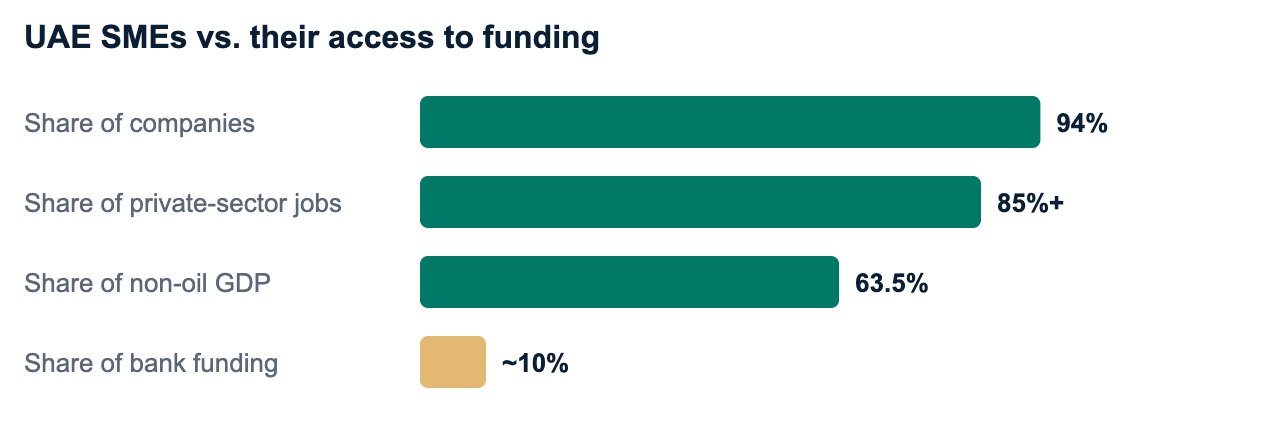
- 94% of UAE companies are SMEs
- 63.5% of non-oil GDP comes from SMEs
- 85%+ of private-sector jobs are in SMEs
- ~10% of total bank funding goes to SMEs
The government wants the number of companies to reach 2 million by 2031, mostly through SMEs. Bank credit has not kept pace. Funded SME credit grew 10.8% in 2025 to AED 92.0 billion, which is real progress, but it is still only about 10% of total bank funding against 94% of the company base.
The shortfall is not new and it is not small. Kearney has estimated the viable-but-unserved SME credit demand across the GCC at more than US$250 billion. Older UAE research found rejection rates of 50–70% for SME loan applications. The root causes are consistent: thin credit history, limited collateral and weak financial reporting.
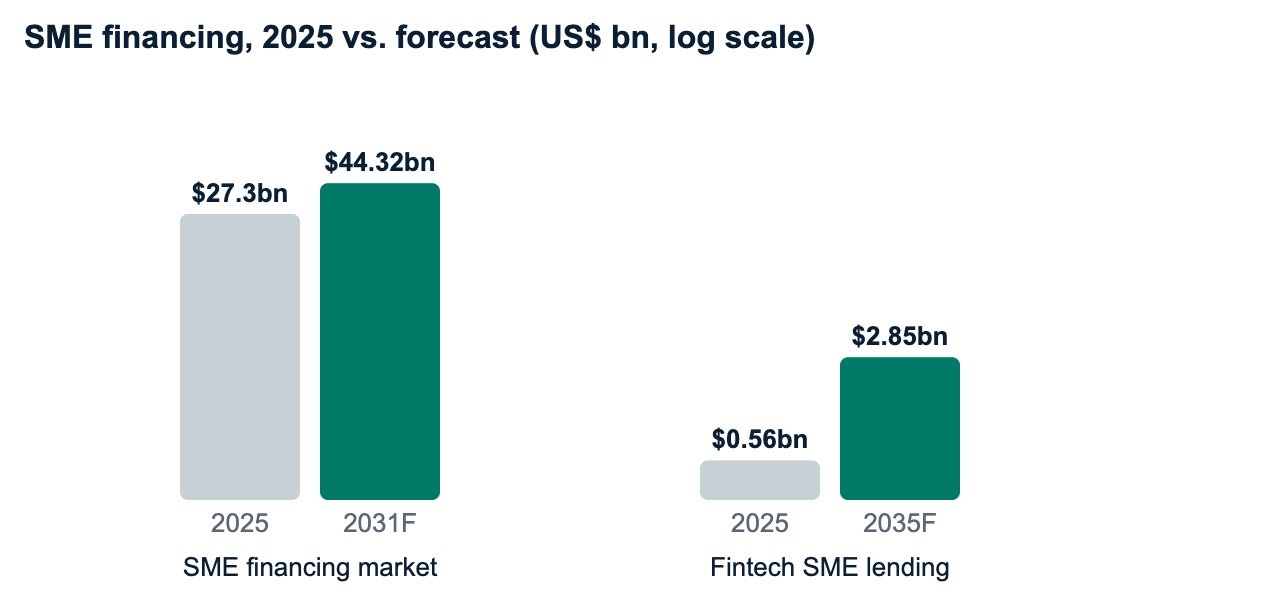
The money is starting to move. The UAE SME financing market was US$27.3 billion in 2025 and is forecast to reach US$44.3 billion by 2031 (8.4% a year). Fintech SME lending is smaller but growing faster, from US$0.56 billion in 2025 to a forecast US$2.85 billion by 2035. These are market-research forecasts, not audited figures.
Seven things UAE SMBs need from a financial provider
1. Onboarding in days, not weeks
A new company cannot wait a month to take its first payment. Digital banks such as Wio and Mashreq NeoBiz typically approve accounts in about 5–7 working days. Traditional banks average 10–15 business days, often with a branch visit. Actual times vary by free zone, shareholding structure and bank.

2. No trapped cash
Many bank packages are priced around an average monthly balance, with a fee when you fall below it. For a young business, a AED 50,000 floor is working capital that cannot be spent on stock or marketing.
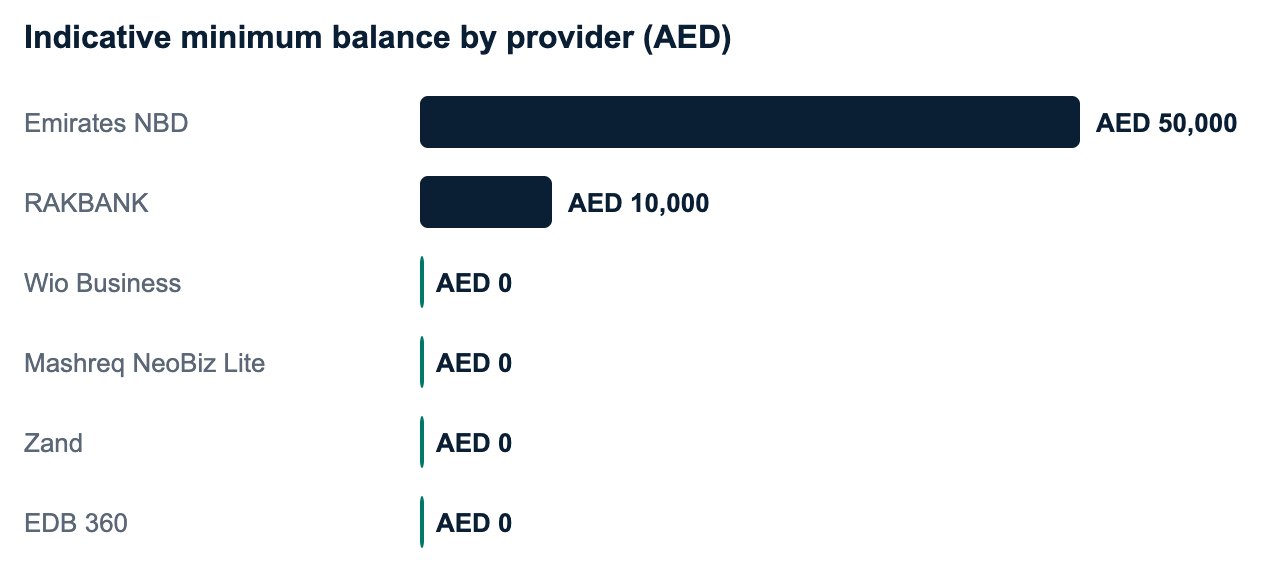
Indicative entry-tier figures from 2026 comparison guides. Packages and waivers change often, so confirm with the provider.
3. Get paid fast, on every channel
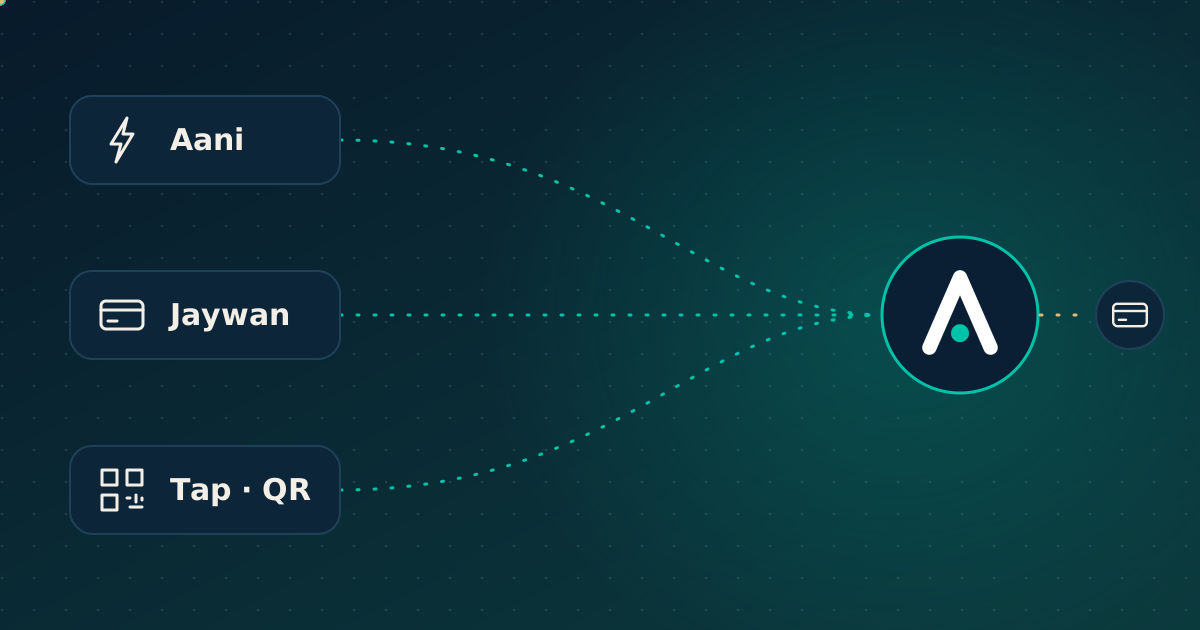
Cards, Apple Pay, payment links and the national Aani instant-payment rail all matter. Visa's research found that over 70% of UAE small businesses saw more revenue and traffic after adopting digital payments. SMEs need acceptance that is live in days, with transparent rates and fast settlement.
4. One app, not five
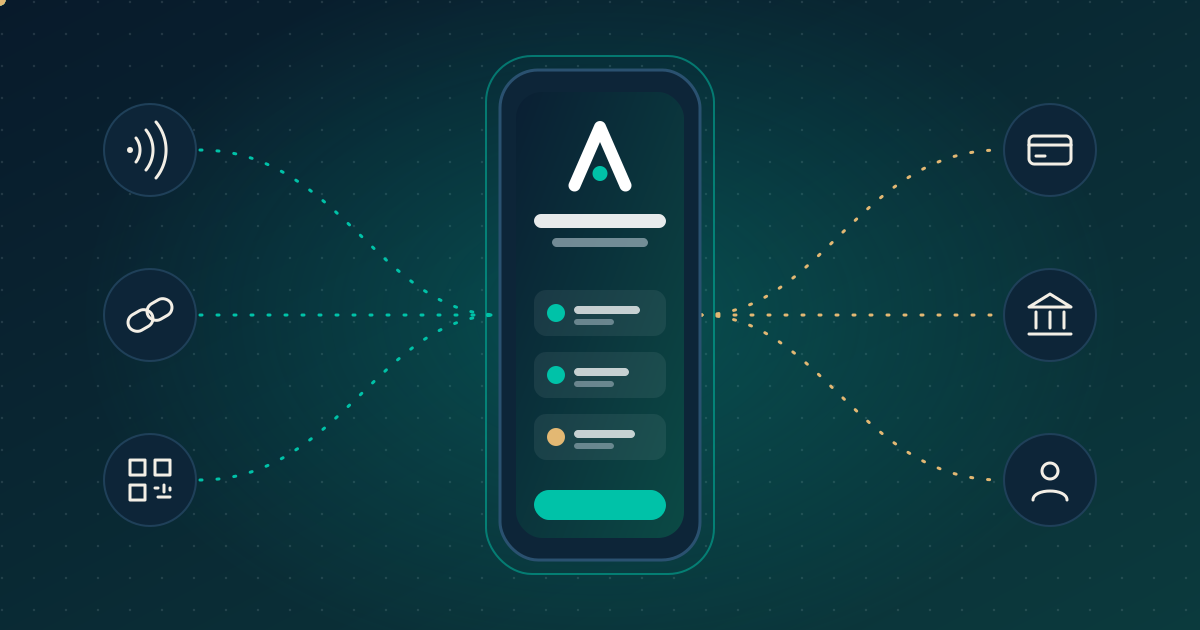
Most SMEs stitch together a bank account, a payment gateway, a card for expenses, a payroll tool and an accounting package. Every gap between them is manual reconciliation. The strongest value today is acceptance, account, cards and payroll in a single view.
5. Credit based on real cash flow
Collateral-based lending shuts out young companies. The UAE's Open Finance framework is now live, which lets lenders read payment and account data and underwrite on actual cash flow. Early fintech lenders such as Beehive report SMEs borrowing again after a difficult year.
6. Compliance built in
Corporate tax, VAT and the Wage Protection System are already part of daily operations. E-invoicing becomes mandatory for businesses under AED 50 million in revenue from 1 July 2027. A provider that issues compliant invoices and handles WPS payroll removes work that most owners do by hand.
7. Honest pricing
Monthly platform fees, fall-below-balance charges and bundled add-ons add up. SMEs want to see the full cost on one page, with no minimum balance and no surprise at month-end.
Who serves SMBs today
The market splits into traditional banks, digital banks, and fintech platforms for acceptance, spend and lending. This is a starting point based on public comparison guides, not an endorsement. Verify current terms.
- Emirates NBD (traditional bank): largest network, trade finance and SME lending programmes. Watch for a ~AED 50,000 average balance on the standard tier and slower onboarding.
- Mashreq NeoBiz (digital arm of a bank): online setup and a zero-balance Lite tier. Higher tiers add monthly fees.
- Wio Business (digital bank): fully digital with no minimum balance. Some tiers carry monthly plan fees.
- RAKBANK (traditional bank): SME focus, quick approvals and a zero-balance RAKstarter account. Standard packages ask for ~AED 10,000.
- Zand (digital corporate bank): API banking and multi-user controls. Introductory fee terms may change.
- EDB 360 and Al Masraf Entelaqati (development and Emirati SME banking): no balance floor and government-backed SME programmes.
- ADCB, FAB and CBD (traditional banks): strong large-company relationships, and CBD has low fees for free zones. Expect balance requirements and longer onboarding.
- Telr, Ziina, Mamo and Paymob (payment acceptance): fast acceptance and payment links at a low entry cost, but not a full business account.
- Pemo, Alaan and Xpence (spend management): team cards and expense control, usually alongside a separate account.
What this means for SMB owners
Before you choose a provider, ask six questions:
- How many days until I can take a first payment?
- What is the minimum balance, and what is the fall-below fee?
- Does acceptance, account and card sit in one app?
- Can it issue VAT-compliant, e-invoice-ready invoices and run WPS?
- Will my payment history count when I apply for credit?
- What is the total monthly cost on one page?
A provider that answers all six well is rare today. That is the opening for the next generation of UAE business finance, and it is why we are building Avora Money: payment acceptance, a business wallet and cards for UAE companies in one app, without minimum balances.
This article is general information, not financial, legal or compliance advice.
Sources
- Ministry of Economy and Tourism: SME share of private-sector jobs
- The National: 2 million companies by 2031, SMEs 63.5% of non-oil GDP
- Khaleej Times: SMEs receive about 10% of bank funding
- Ken Research: UAE SME Financing Market 2026-2031
- Credence Research: UAE Fintech Lending and SME Credit Platforms
- AGSI / Kearney: GCC SME financing gap above US$250bn
- Gulf Business: SME loan rejection rates and World Bank on GCC SME lending
- Enterprise: UAE SMEs are borrowing again
- Binderr: business account approval times
- Avyanco: best banks to open a business account in the UAE
- Pemo: business bank accounts in the UAE
- UAE Free Zone Finder: neobank comparison 2026
- Entrepreneur Middle East: Visa study on SME digital payments